
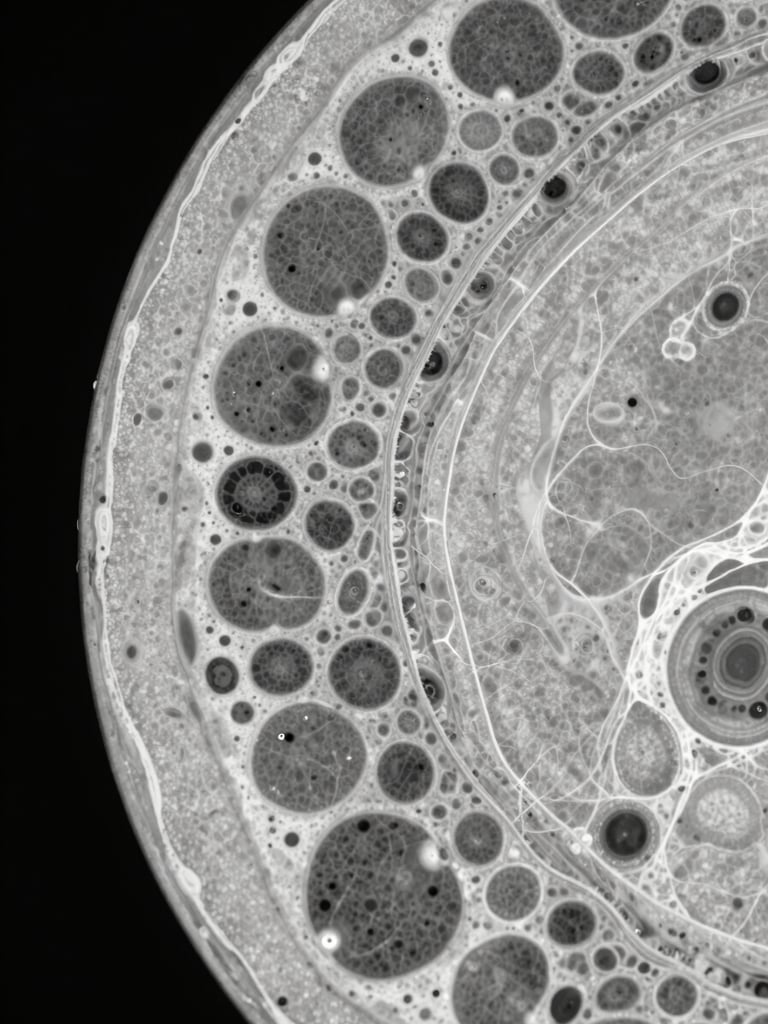
MDS Niche Model: Stromal Architecture Intact
The MDS Niche Model preserves the dysfunctional stromal microenvironment — fibrotic remodeling, cytokine dysregulation, and hematopoietic progenitor suppression — across both low- and high-risk disease profiles. Validated for translational relevance in compound screening programs.
Engineered tissue architecture, specified
Three-dimensional stromal scaffold incorporating primary human mesenchymal stromal cells, endothelial co-culture, and extracellular matrix components recapitulating MDS fibrotic remodeling. Lot characterization performed against a fixed disease reference profile.
Format: 96-well and 384-well compatible
Culture duration: 7–14 days post-seeding. Viability QC threshold: ≥85% stromal confluence at dispatch. Disease profile: low-risk (del5q, SF3B1) and high-risk (TP53, RUNX1) variants available as distinct lots.
Compatible endpoints: colony-forming unit suppression, erythroid differentiation index, cytokine secretion profiling. Validated for hypomethylating agent dose-response and lenalidomide sensitivity assays with defined readout windows.
Shipped cryopreserved with recovery protocol. Shelf stability: 12 months at −80 °C. Technical data package included with each lot.
Every lot profiled against the same disease reference
Ring Sideroblast Prevalence
SF3B1 Mutation Status
CD34+ Progenitor Frequency
Quantified by Prussian blue staining per lot. Reported as percentage of erythroid precursors. Acceptance threshold documented in the accompanying certificate of analysis.
Confirmed by targeted sequencing per lot. Variant allele frequency reported. Lots carrying K700E and K666N substitutions are catalogued separately for direct comparison across experiments.
Flow cytometric quantification of CD34+ and CD38− compartments per lot. Progenitor frequency reported as a percentage of total viable cells within the stromal construct.
Request the MDS model for your program
Procurement, lot selection, and technical consultation handled through a single inquiry. Response within one business day.